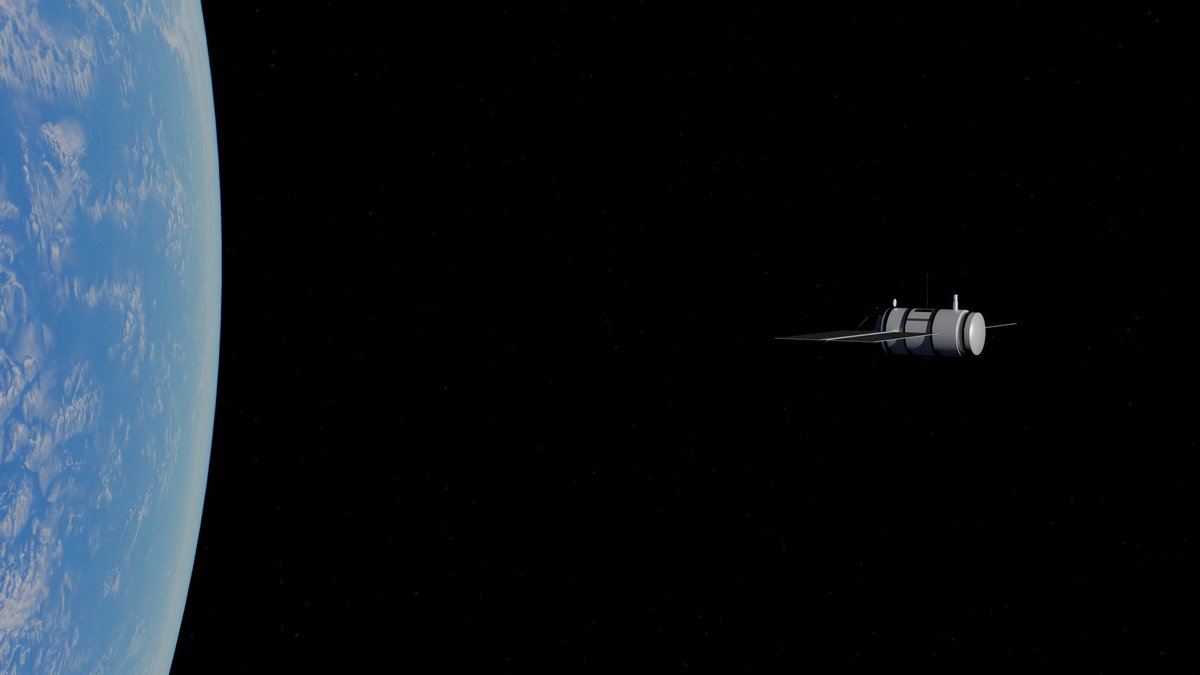
European Space Agency scientists have announced a system that can monitor tiny pieces of debris in geostationary orbit in near real time, a capability that could help protect satellites essential for communications and navigation.
ESA hopes to protect satellite traffic.
How the new system works
The technology combines a radar transmitter at the Massachusetts Institute of Technology’s Lincoln Laboratory with a receiver at the United Kingdom’s Lovell Telescope. The transmitter fires radio waves that bounce off objects and return to Earth where the Lovell dish captures the signal. Analysts then process the data to determine the object’s position and trajectory.
Radar has long been used to track space debris, but conventional systems lose sensitivity at the distance of geostationary orbit. By linking two facilities that are continents apart, the ESA team has extended detection range enough to spot objects that were previously invisible to ground‑based radar.
According to the project’s documentation, the arrangement required more than seven years of development and testing. The result is a “real‑time tracking” capability that delivers updates fast enough for satellite operators to consider maneuvering around potential collisions.
Related: Starship Faces New Setbacks and Doubts
Why geostationary orbit matters
Geostationary orbit hosts many high‑value assets, including weather and communications satellites that orbit at a fixed point relative to the Earth’s surface. A collision in this region could generate a cascade of debris, endangering the same orbit for years to come.
Current monitoring relies heavily on optical telescopes that sweep the sky at night, a method that can miss small, fast‑moving objects. The new radar‑based approach offers a complementary tool that works regardless of lighting conditions and can provide continuous coverage.
Officials note that the system is not limited to “junk.” It can also track operational spacecraft, which may be relevant for identifying natural hazards such as micrometeoroid streams or even deliberate threats.
The ability to receive data that is truly up to date matters for operators who need to make quick decisions. A satellite could be nudged out of the way if a collision risk is identified with enough warning, reducing the chance of a chain reaction that would litter the orbit with fragments.
In practice, this development could mean fewer service interruptions for users who depend on satellite‑based internet, television, and GPS. If an operator can avoid a collision, the downstream effect is a more reliable set of services for consumers and businesses alike.
Related: Budget-Friendly Brilliance Meets Eco-Conscious: Lab-Grown Diamonds for Manchester Students
Future expansion plans
Researchers plan to add more radar receivers to the network, creating multiple observation points that can triangulate an object’s location in three dimensions. Such cross‑referencing would improve accuracy and allow for more precise risk assessments.
While the current setup already proves the concept, expanding the infrastructure could eventually replace or augment existing optical surveys. The aim is to build a scalable system that can keep pace with the growing number of satellites launched each year.
One minor drawback is the reliance on large, expensive facilities, which may limit how quickly the network can grow. Nonetheless, the proof of concept demonstrates that the technology works and that further investment could yield a more robust safeguard for the space environment.
For now, the ESA’s real‑time tracking system stands as a significant step toward better debris management in the most important orbital region. The next phase will test how well the expanded network can handle the increasing traffic that characterizes modern space operations.